WordPress Accessibility Without the Guesswork

by EaseAccess | Jul 16, 2026 | EaseAccess

Table of Contents

    Introduction

    WordPress Accessibility: Here's a number worth nothing: according to WebAIM's 2026 Million report, which evaluates the home pages of the top one million websites every year, 95.9% of those home pages had at least one detectable WCAG 2 failure, up from 94.8% the year before. 

    The same report found an average of 56 accessibility errors per home page, and pinned low-contrast text as the single most common issue, present on 83.9% of pages checked.

    That means most sites are quietly turning away visitors who rely on screen readers, keyboard navigation, or higher contrast to get around, and their owners usually have no idea it's happening. Every one of those visitors is a potential customer, subscriber, or reader who hits a wall and simply leaves.

    And the legal stakes are real and rising. In the United States, website accessibility lawsuits filed in federal court reached 3,117 in 2025, a 27% increase over 2024, according to law firm Seyfarth Shaw's Title III tracking, and that figure doesn't include state-court filings, which push the full-year total past 5,000. 

    In the EU, the European Accessibility Act has required accessible digital products and services since June 28, 2025. Making your site usable for everyone is both the right thing to do and, increasingly, a legal expectation.

    There's a quieter business case too: accessible sites tend to have cleaner markup, clearer structure, and stronger SEO.


    What "WordPress Accessibility" actually means

    Strip away the jargon and accessibility comes down to four principles from the WCAG standard. Your site should be:

    • Perceivable: people can actually see (or hear) your content
    • Operable: people can navigate it, with or without a mouse
    • Understandable: people can make sense of it
    • Robust: it works with whatever device or assistive technology they bring
    Most conversations about web accessibility focus on the site owner: scans, fixes, compliance. But accessibility is ultimately about the person on the other end of the screen, and different people need different things from the same page.

    An accessibility profile is a preset bundle of visitor-facing adjustments: text, color, navigation, and motion, activated with a single click instead of dozens of individual settings 

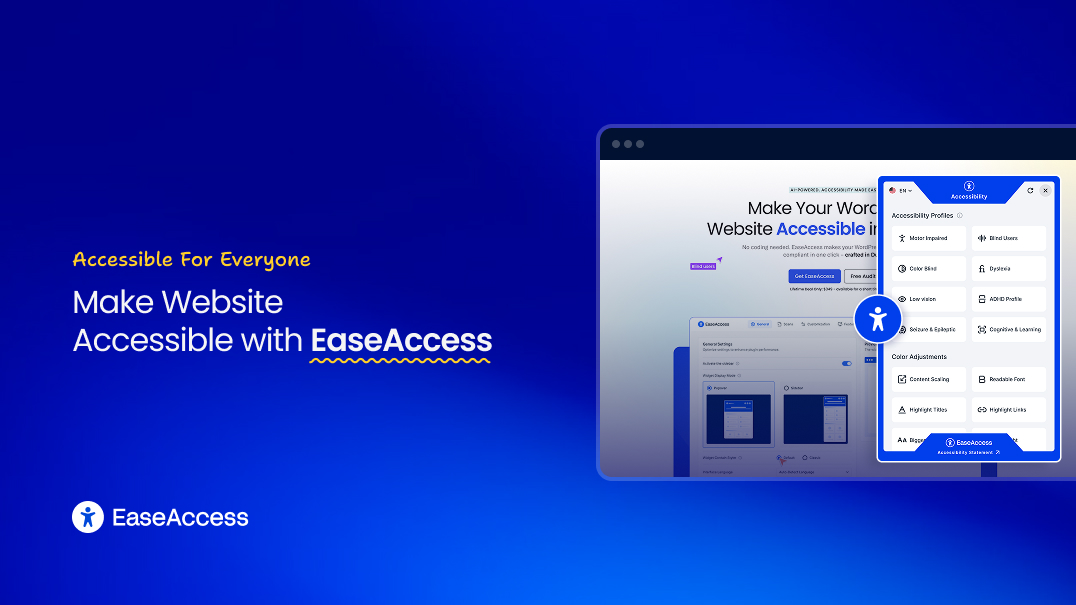
    That's what accessibility profiles are for. Instead of asking a visitor to hunt through a dozen individual settings, a profile bundles the right adjustments into one choice. EaseAccess includes eight, each built around a real set of needs.


    8 Accessibility Profiles

    Motor Impaired Enlarges clickable areas and supports keyboard-friendly navigation, so people who don't use a mouse, or who find precise clicking difficult, can move through your site with less effort.

    Blind Users: Optimizes the page for screen-reader output, prioritizing a clean, logical reading order over visual styling.

    Color Blind: Adjusts color presentation so information that's normally conveyed by color alone stays distinguishable.

    Color Blind - EaseAccess

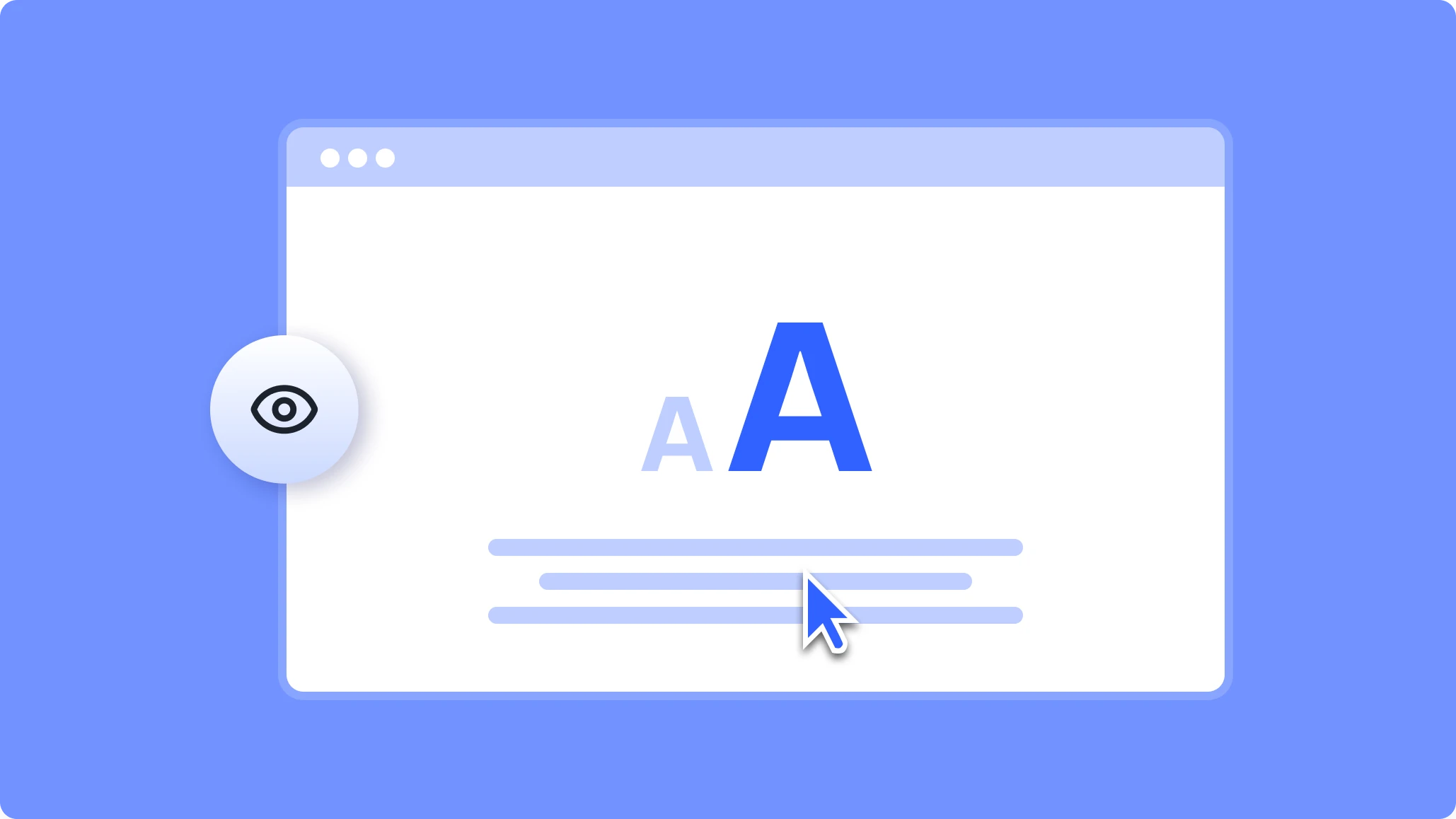
    Low Vision: Increases text size, contrast, and cursor visibility for visitors with reduced sight who aren't using a screen reader.

    Cognitive Learning: Simplifies the visual field and reduces distractions to help visitors who process information best with fewer things competing for attention.

    Low Vision Profile- EaseAccess

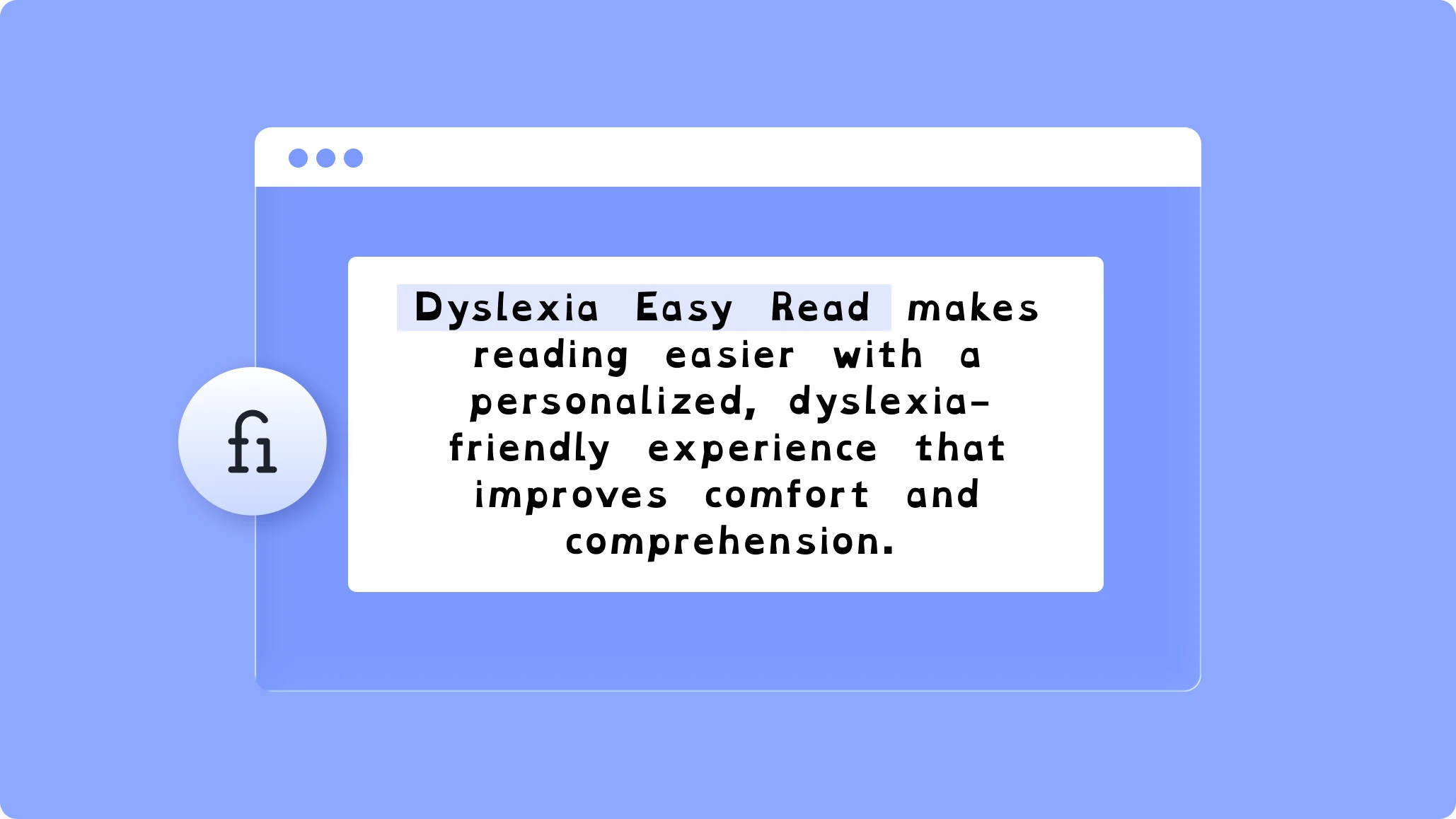
    Dyslexia: Switches to a more readable font and adjusts spacing to reduce the visual crowding that makes text harder to process.

    Seizure & Epileptic: Pauses animations and reduces motion, lowering the risk for visitors sensitive to flashing or moving content.

    Dyslexia Profile - EaseAccess

    ADHD Profile: Combines a reading guide and reduced distractions to help visitors hold focus on one section at a time.

    Each accessibility profile targets a distinct need rather than applying one generic fix to everyone.

    ADHD Profile- EaseAccess


    Where an accessibility profile fits and where it doesn't 

    Profiles are a genuine usability benefit for your visitors. But it's worth being clear about what they are and aren't. They personalize how someone experiences your existing page, they don't rewrite the underlying code, and they aren't a substitute for building an accessible site in the first place.

    This is the honest line EaseAccess holds throughout: automated and frontend tools address part of the picture, roughly 30–40% of WCAG issues, and manual review is still recommended for the rest. Profiles make your site friendlier for the people using it today. Fixing the source, with the Scanner and Auto-Fix Engine, is how you keep improving underneath.


    How visitors turn on an accessibility profile 

    Turning on an accessibility profile takes one click inside the EaseAccess widget: no account, no setup. 

    The profiles live in the EaseAccess widget. A visitor opens it, picks the profile that fits, and the adjustments apply immediately: no account, no setup on their end. They can switch it off or change it just as easily.

    For you, it's one component of a larger workflow: check your site, apply supported fixes, publish a statement, and give visitors the controls to tailor the rest.

    Explore the EaseAccess widget and all 8 profiles


    Frequently asked questions


    Q: What is an accessibility profile?

    Answer: An accessibility profile is a preset bundle of visitor-facing adjustments- text, color, navigation, or motion changes- grouped around a specific need, like low vision or ADHD. Instead of adjusting a dozen individual settings, a visitor picks one accessibility profile and the relevant changes apply immediately.


    Q: How many accessibility profiles does EaseAccess offer?

    Answer: EaseAccess includes 8 accessibility profiles: Motor Impaired, Blind Users, Color Blind, Dyslexia, Low Vision, Cognitive Learning, Seizure & Epileptic, and ADHD Profile. Each accessibility profile is built around a distinct set of visitor needs rather than a one-size-fits-all setting.

    Q: Do accessibility profiles replace WCAG compliance work?

    Answer:No. An accessibility profile personalizes how a visitor experiences your existing page — it doesn't rewrite the underlying code. Profiles support accessibility workflows alongside the Scanner and Auto-Fix Engine, but manual review is still recommended for full WCAG coverage.

    Q:  How does a visitor turn on an accessibility profile?

    Answer: A visitor opens the EaseAccess widget, selects the accessibility profile that fits their needs, and the adjustments apply instantly — no account or setup required. They can switch profiles or turn them off just as easily.

    Q: Which accessibility profile should I recommend for dyslexic visitors?

    Answer:The Dyslexia accessibility profile switches to a more readable font and adjusts spacing to reduce visual crowding, making text easier to process for visitors with dyslexia.

    Stay Tuned For More Updates👇

    That’s all for this month’s progress report. Stay tuned for more updates, and don’t forget to follow us by email and subscribe to our YouTube channel to ensure you don’t miss a thing. I’ll return next month with another Divi 5 progress update and a link to the Divi Alpha demo!

    Stay Tuned For More Updates👇
    protection-shield

    EaseAccess is built by a team of developers, writers, designers, and marketers who believe the web should work for everyone. We create accessibility tools for WordPress and share practical content that helps you apply supported corrections, understand WCAG 2.1 guidelines, and design with every visitor in mind.

    Check Out These Related Posts